Don’t fall into the ‘grease trap’
27 November 2025
As part of the City of Cape Town’s summer readiness efforts, the Water and Sanitation Directorate has intensified inspections of grease traps at restaurants and food businesses to prevent sewer blockages and overflows.
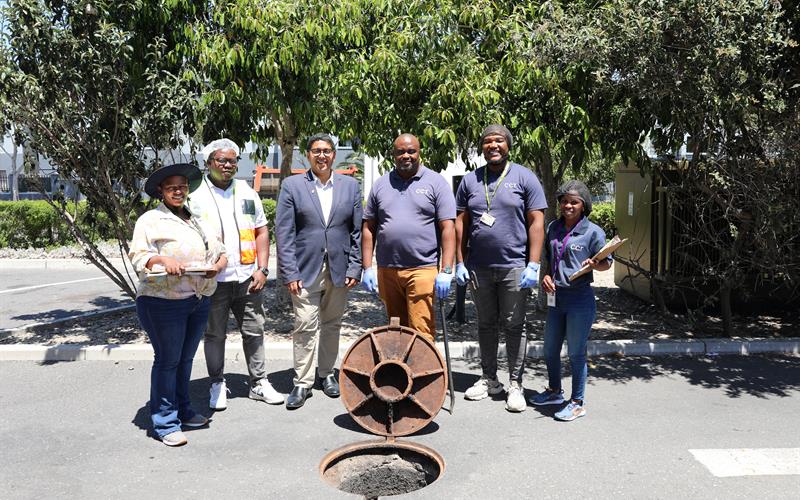
During a recent area inspection in Table View, the Water Pollution Control Unit was joined by the City’s Mayoral Committee Member for Water and Sanitation, Councillor Zahid Badroodien, to assess compliance at local eateries and food production establishments.
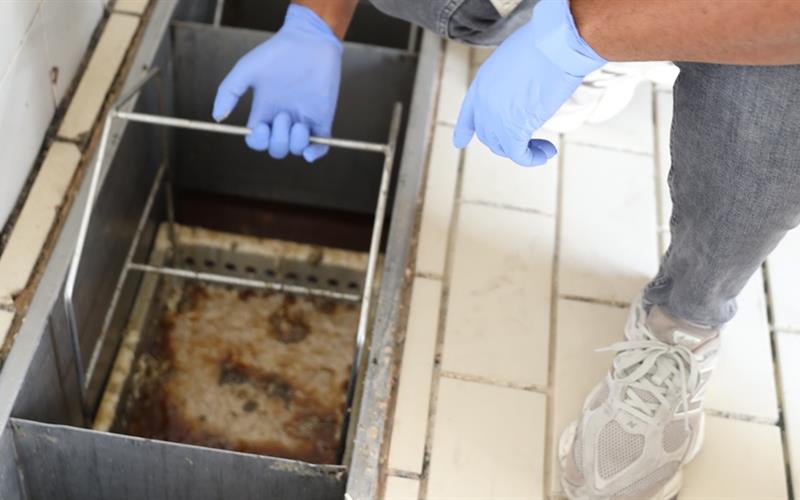
Restaurant and eatery grease traps capture fats, oils and grease (FOG) before they enter the sewer system, preventing the formation of solid fat deposits and sewer blockages.
Detrimental consequences of grease in wastewater
- Blocks sewer pipes and reduces flow capacity
- Causes pump station failures
- Leads to sewer overflows that pose health and environmental risks
- Increases operational and maintenance costs at wastewater treatment facilities, affecting effluent quality
Who must install the fat, oil and grease traps?
- Any premises preparing food for the public must have a properly sized and maintained grease trap.
- Such premises include, but are not limited to, restaurants, take-away shops with deep fryers, hospitals, hotels, bakeries, butcheries and supermarkets.
Business owners have a responsibility to ensure that their business practices do not block or damage sewage infrastructure; and must comply with the
Wastewater and Industrial Effluent By-law.
 The City monitors wastewater disposal through its Water Pollution Control officers. Non-compliance may result in fines, legal action, prosecution or disconnection from the sewer system.
How to safely dispose of fats, oil and grease?
- Collect waste oil and fat in a suitable, secure container and arrange for it to be collected by a licensed waste contractor. Do not try to dissolve fat with hot water down the sink, as it will only solidify again further down and block the pipes/drains.
- Install and properly maintain a grease trap if you run a restaurant or are involved in food preparation. Read our
grease traps information booklet for more information.
- Put a strainer in the sink to catch food or other waste before it goes down the drain and empty the contents into the bin.
During the inspection blitz, which started in October 2025, 53 businesses were inspected and 18 contravention notices were issued.
More inspections of this nature are planned across the city in the upcoming weeks.
‘Our sewer system is designed only for human waste, toilet paper and used greywater like sink, bath, or basin wash water. Anything else, especially fats and oils, can block pipes and damage pump stations, some of which are located near our beaches. These inspections help prevent overflows,’ said the City's Mayoral Committee Member for Water and Sanitation, Councillor Zahid Badroodien.
For grease trap compliance queries or complaints, contact the Technical Operations Centre at 0860 103 089. For industrial effluent advice, call the Water Pollution Control Inspectorate on 021 444 9208
END
Published by:
Media Office, City of Cape Town